
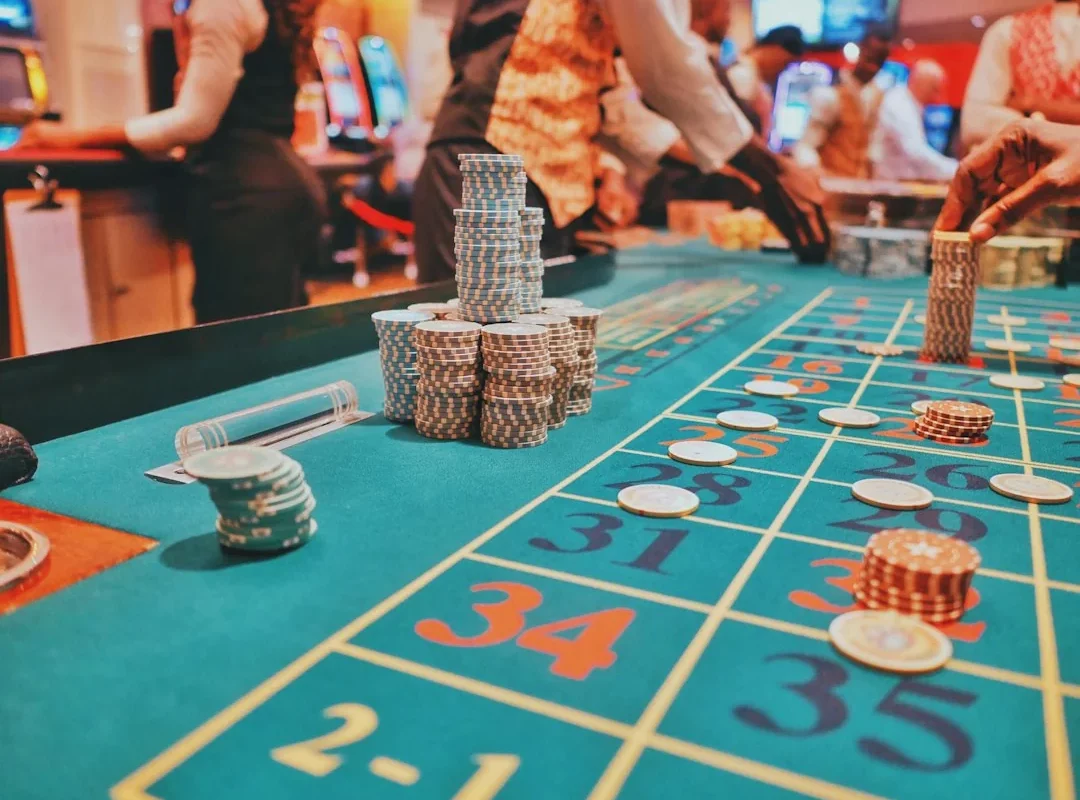
Every day, thousands of players sit down at online slots convinced they can spot a “hot” machine, or double their bets after losses believing they’ll beat the house. Despite decades of accessible information about how casino games actually work, myths persist—and they cost players real money. Research shows that a significant portion of online casino players believe they can predict outcomes or use betting systems to overcome the house edge. This article cuts through the noise to separate gambling facts from fiction. You’ll learn what truly affects your odds, which strategies are mathematical impossibilities, and how understanding the realities behind casino games leads to smarter, more enjoyable play.
Myth: Hot and Cold Slots Are Real
Walk into any casino and you’ll hear players swear they can spot a “hot” machine about to pay out, or warn you away from a “cold” one that’s been eating money all day. This belief is so widespread that players will camp out at machines, convinced their big win is just around the corner. The truth? Hot and cold slots are pure fiction.
How RNGs Actually Work
Every legitimate online slot machine operates using a Random Number Generator (RNG), a computer algorithm that produces thousands of number combinations per second. When you hit spin, the RNG stops at a random combination that determines your outcome. Crucially, each spin is completely independent. The machine doesn’t remember what happened five spins ago or five thousand spins ago. It has no memory, no patterns, and no cycles.
This technology works identically whether you’re playing free demo games or wagering real money. The probability of hitting a winning combination on any given spin can range from 1 in 50 to 1 in several million, depending on the game’s design, but that probability remains constant spin after spin.
Why Slots Feel Hot or Cold
If machines are truly random, why does it feel like they go through streaks? The answer lies in variance and volatility. The Return to Player (RTP) percentage you see advertised is calculated over millions of spins, not your 50-spin session. A slot with 96% RTP doesn’t mean you’ll get back $96 for every $100 you wager today. You might lose it all, or you might triple your money.
Short-term results cluster randomly. Three big wins in 20 spins feel hot. Twenty dead spins feel cold. But these are just natural fluctuations in random outcomes, not the machine entering a different mode. Your brain sees patterns where none exist.
Myth: Betting Systems Beat the House Edge
The Martingale system promises a seductive logic: double your bet after each loss, and when you eventually win, you’ll recover everything plus a profit. Countless players swear by it. The math, however, tells a different story.
No betting pattern can alter the underlying probability of a game. If a roulette wheel has a 5.26% house edge on American roulette, that edge remains constant whether you bet $5 flat or follow an elaborate progression. The Martingale, Fibonacci, d’Alembert, and every other system merely redistribute when you win and lose, not whether the house maintains its advantage over time.
Here’s why these systems persist: they work brilliantly in the short term. A player using Martingale might win eight or nine sessions in a row, walking away with small profits each time. The system feels unbeatable. Then comes the inevitable losing streak. After seven consecutive losses starting with a $10 bet, you’re staring down a $1,280 wager just to win back your original stake. Most players hit one of two walls first: the table’s maximum bet limit or their own bankroll ceiling.
The mathematical proof is straightforward. Each bet carries independent odds. A coin doesn’t “remember” it landed on heads five times; the next flip still has 50/50 odds (minus the house edge on casino games). Varying your bet size based on previous outcomes doesn’t change the probability of the next outcome.
The real danger isn’t just losing money faster. It’s the false confidence that leads players to chase losses with exponentially larger bets, turning manageable losses into catastrophic ones. Betting systems can make gambling more engaging, but they can’t bend probability in your favor.
Myth: Past Results Predict Future Spins
Walk into any casino and you’ll spot someone scribbling down roulette numbers, convinced they’ve cracked a pattern. Red has hit five times in a row, so black is “due,” right? Wrong. This is the Gambler’s Fallacy in action, one of the most stubborn cognitive biases that costs players real money. Research shows that approximately 23% of online casino players believe they can predict slot machine outcomes based on previous spins, despite the mathematical impossibility of doing so.
The fallacy stems from a fundamental misunderstanding of probability. Humans are pattern-seeking creatures, and our brains struggle to accept true randomness. When we see red hit repeatedly on a roulette wheel, we instinctively feel that the universe owes us a black. But the wheel has no memory, no ledger tracking what’s “due.” Each spin exists in isolation.
Understanding Independent Events
Every slot spin, roulette rotation, and dice roll is a statistically independent event. The Random Number Generator (RNG) in slot machines produces outcomes thousands of times per second, and the number it lands on when you hit “spin” has zero connection to the previous result. If a slot hasn’t paid out in 100 spins, it’s not “hot” or “ready.” The odds on spin 101 are identical to spin 1.
The classic example: the 1913 Monte Carlo incident, when black hit 26 times consecutively. Players lost millions betting on red, certain the streak couldn’t continue. But each spin carried the same roughly 50/50 odds, regardless of history. The wheel never owed them anything.
Myth: All Casino Games Have the Same Odds
One of the most expensive assumptions a player can make is that all casino games offer the same chances of winning. The house edge—the mathematical advantage the casino holds—varies dramatically from game to game, sometimes by a factor of ten or more.
Blackjack stands out as the most player-friendly option when played with basic strategy. Skilled players can reduce the house edge to below 0.5%, making it the only common casino game where the odds approach nearly even. Compare that to American roulette, which carries a 5.26% house edge, and the difference becomes starkly apparent. Your bankroll will last roughly ten times longer at a blackjack table than at an American roulette wheel, assuming equivalent bet sizes.
Even within the same game family, variations matter. European roulette’s single zero configuration drops the house edge to 2.70%—nearly half that of its American counterpart. That’s the cost of one extra number on the wheel.
Slots occupy a wide spectrum, with return-to-player percentages typically between 92% and 98%. This translates to a house edge ranging from 2% to 8%, depending on the specific game and provider. Unlike table games where you can influence outcomes, slots are pure chance, which means that higher house edge compounds over time with no skill-based mitigation.
| Game | House Edge | Skill Factor |
|---|---|---|
| Blackjack (basic strategy) | <0.5% | High |
| European Roulette | 2.70% | None |
| Slots (average) | 2-8% | None |
| American Roulette | 5.26% | None |
| Keno | 25-40% | None |
Understanding these differences doesn’t guarantee wins, but it does inform smarter choices about where to spend your entertainment budget. Skill-based games reward study and practice with better odds, while purely luck-based games extract a steeper price for the thrill.
Myth: Card Counting Works Online
Card counting has dominated blackjack folklore since Edward Thorp published Beat the Dealer in 1962, but this legendary strategy hits a brick wall in online casinos. The simple reason? Virtual blackjack games shuffle their digital decks after every single hand, making it impossible to track which cards have been played.
Traditional card counting relies on deck penetration—watching as the dealer works through multiple hands before reshuffling, allowing skilled players to identify when the remaining cards favor them. Online RNG (random number generator) blackjack eliminates this entirely. Each hand draws from a freshly shuffled virtual deck, resetting the count to zero before you even see your next cards.
Live Dealer Blackjack: A Different Story
Live dealer blackjack operates differently since real dealers use physical cards and shuffle at predetermined points, usually when 50-75% of the shoe has been dealt. This creates some theoretical counting opportunities, though casinos counteract this with shallow penetration and continuous shuffling machines. More importantly, the slower pace and betting time limits make any edge far less profitable than in brick-and-mortar casinos.
What Actually Works Online
Instead of counting cards, focus on strategies that matter in the digital environment:
- Master basic blackjack strategy to minimize the house edge
- Choose games with favorable rules like dealer stands on soft 17
- Take advantage of bonuses that apply to blackjack (though read wagering requirements carefully)
- Practice bankroll management and set strict session limits
The math doesn’t lie—online blackjack demands different tactics than its land-based cousin.
Myth: Casino Bonuses Are Easy Money
That $500 welcome bonus looks tempting until you realize you’ll need to wager $25,000 before you can cash out a single dollar. Casino bonuses aren’t free money—they’re marketing tools wrapped in mathematical complexity that most players never escape.
Understanding Wagering Requirements
Wagering requirements are the number of times you must bet your bonus (and often your deposit) before withdrawing winnings. A $100 bonus with 35x wagering means you’ll need to place $3,500 in bets before any payout is allowed. These multipliers typically range from 20x to 50x, turning what seems like a gift into a statistical trap.
Only 13.5% of players who claim bonuses successfully meet wagering requirements and withdraw winnings. The rest either forfeit the bonus, lose their bankroll trying to clear it, or abandon the attempt when they realize the scale of the challenge.
Here’s what makes bonuses harder to clear than they appear:
- Game contributions vary—slots usually count 100%, but table games often contribute just 10-20% or are excluded entirely
- Time limits force you to play faster than you normally would, increasing risk
- Maximum bet restrictions (typically $5) prevent aggressive strategies to speed up wagering
- Winnings caps often limit how much you can actually withdraw, even after clearing requirements
Bonuses are worth claiming when you were planning to deposit and play anyway, you understand the specific terms, and the wagering requirements sit below 30x on games you actually enjoy. Treat them as extended playtime rather than profit opportunities, and you’ll avoid the disappointment that trips up most players.
What Actually Affects Your Odds
Your success at online casinos isn’t determined by lucky charms or betting patterns—it comes down to measurable factors you can actually control. Understanding these elements separates players who manage their bankrolls effectively from those who burn through deposits chasing myths.
1. Choose Games With Lower House Edges
Not all casino games are created equal. The house edge varies dramatically between games, and picking the right one matters more than any betting system. For example, blackjack players using basic strategy face a house edge of approximately 0.5%, compared to 2-3% for those playing without strategy. Compare that to some slot machines or certain table game side bets where the house edge can exceed 10%.
2. Master Strategy in Skill-Based Games
Games like blackjack, video poker, and certain poker variants reward players who learn optimal strategy. These aren’t random outcomes you hope to influence—they’re games where your decisions directly impact the house edge. Study basic strategy charts, practice with free versions, and commit the plays to memory.
3. Manage Your Bankroll and Set Session Limits
Set a budget before you play and stick to it. Divide your bankroll into session amounts, and never chase losses by exceeding your predetermined limit. This won’t change the odds, but it ensures you can weather variance without going broke during a cold streak.
4. Understand Variance and Play Within It
High volatility games offer larger but less frequent wins, while low volatility games provide smaller, steadier payouts. Match the game’s variance to your bankroll size—playing high volatility slots with a small bankroll is a recipe for quick losses.
5. Verify Casino Licensing and RNG Certification
Only play at licensed casinos where random number generators are tested by independent agencies like eCOGRA, iTech Labs, or GLI. These certifications ensure true randomness and fair play, protecting you from rigged outcomes.
The Bottom Line: Knowledge Beats Superstition
Understanding the mathematical realities behind casino games doesn’t make you a guaranteed winner—nothing can do that. But it does transform how you approach online gambling, shifting your focus from chasing myths to making informed decisions. The house edge exists in every casino game, and no betting system, lucky ritual, or pattern-tracking will eliminate it. That edge is simply the price of entertainment.
What separates smart players from those who burn through bankrolls isn’t luck—it’s knowledge. Choose games with lower house edges, master basic strategy where it applies, set strict bankroll limits, and understand that variance will create both winning and losing streaks that have nothing to do with the machine being “hot” or “cold.” Casino gaming offers genuine entertainment value when you know what to expect and play within your means.
The myths persist because they offer comfort in an environment built on randomness. But comfort built on false beliefs leads to poor decisions and bigger losses. Arm yourself with facts, play the games you enjoy, and remember that every spin, every hand, and every roll is exactly what the math says it is—no more, no less. That’s not pessimism; it’s the foundation of smarter, more enjoyable play.