
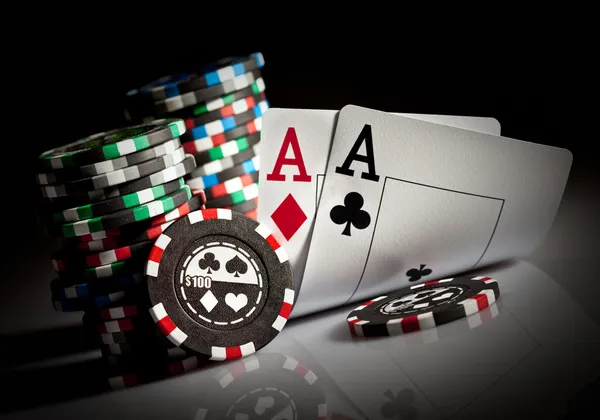
Walk into any casino and you’ll face dozens of table games competing for your attention — and your money. What most players never consider is that the difference in house edge between these games is enormous. Choosing blackjack over a novelty carnival game can mean the difference between losing $5 per hour and losing $50 per hour at the same average bet size. Understanding which games offer the best mathematical return is the single most impactful decision a casino player can make.
This guide ranks the major table games by house edge, explains what drives those numbers, and provides the strategy essentials you need to actually achieve the theoretical minimums. Because here’s the catch — most published house edge figures assume optimal play. If you’re making strategy mistakes, your actual disadvantage is significantly worse than the numbers suggest.
How House Edge Works
The house edge represents the percentage of each wager that the casino expects to keep over the long run. A game with a 1% house edge means that for every $100 you bet, you’ll lose $1 on average. This doesn’t mean you’ll lose exactly $1 every time — short-term variance creates both winning and losing sessions — but across thousands of bets, the math converges toward that expected loss rate.
Two important clarifications that many players overlook:
- House edge applies to total action, not buy-in. If you sit down with $200 and bet $10 per hand for 100 hands, your total action is $1,000, not $200. The house edge applies to that $1,000.
- Hands per hour matter. A game with a 2% house edge dealt at 80 hands per hour costs you more per session than a game with a 3% house edge dealt at 30 hands per hour, assuming the same bet size.
The Rankings: Best to Worst House Edge
Here’s how the major table games stack up when played with optimal strategy.
1. Blackjack — 0.5% House Edge
Blackjack remains the king of casino table games for mathematically minded players, and it has held that position for decades. With perfect basic strategy and favorable rules (3:2 natural blackjack payouts, dealer stands on soft 17, double after split allowed), the house edge drops to approximately 0.5%. Some single-deck games with liberal rules can push it even lower.
Strategy Essentials
Basic strategy is a complete set of mathematically correct decisions for every possible player hand against every possible dealer upcard. It’s not a heuristic or a guideline — it’s a solved problem. Memorizing the basic strategy chart is non-negotiable if you want to play at the theoretical minimum house edge.
Key rules to look for:
- 3:2 blackjack payouts (avoid 6:5 tables — they add approximately 1.4% to the house edge)
- Dealer stands on soft 17 (about 0.2% better than dealer hits soft 17)
- Double after split allowed (saves roughly 0.15%)
- Late surrender available (saves about 0.07%)
Common Mistake
The biggest leak for recreational blackjack players is refusing to hit hard 16 against a dealer 10. It feels wrong to risk busting, but basic strategy is clear: hitting produces a better expected outcome than standing. Trusting the math over your instinct is the entire game.
2. Baccarat — 1.06% House Edge (Banker Bet)
Baccarat offers one of the lowest house edges in the casino with almost zero strategy required. The banker bet carries a 1.06% edge, the player bet sits at 1.24%, and the tie bet — which you should never touch — lurches up to 14.36%.
Strategy Essentials
Bet on banker every hand. That’s it. Baccarat has no player decisions that affect the outcome (the drawing rules are fixed), so the only strategic choice is which bet to place. The 5% commission on winning banker bets is already factored into the 1.06% house edge figure.
Pattern tracking and scorecards — those elaborate grids that casinos encourage players to fill out — have zero predictive value. Each hand is independent. The previous 10 results tell you nothing about the next one. The casino provides scorecards because they know superstitious players bet more and stay longer.
3. Craps — 1.36% House Edge (Pass/Don’t Pass)
Craps intimidates new players with its complex layout and rapid pace, but the core bets are among the best in the casino. The pass line and don’t pass line carry house edges of 1.41% and 1.36% respectively. More importantly, the odds bet — placed behind your pass or don’t pass wager after a point is established — has zero house edge. It’s the only bet in the casino that pays at true mathematical odds.
Strategy Essentials
The optimal craps strategy is simple: bet the pass or don’t pass line, then back it up with the maximum odds the table allows. If a casino offers 3-4-5x odds, your combined house edge on pass plus odds drops to approximately 0.37%. Ignore every other bet on the layout. Hardways, field bets, proposition bets, and “Big 6/8” all carry significantly higher house edges ranging from 2.8% to over 16%.
Common Mistake
Many craps players scatter chips across the layout, placing simultaneous bets on hardways, yo’s, and field bets while also playing the pass line. This negates the favorable pass line odds by mixing in high-edge proposition bets. The math-optimal approach is boring by craps table standards, but it’s the most effective way to play.
4. Pai Gow Poker — 2.5% House Edge
Pai Gow Poker deserves more attention than it typically receives from advantage-oriented players. The house edge sits around 2.5%, but the game’s defining characteristic is its extremely low volatility. Roughly 41% of hands result in a push (where the player wins one hand and the dealer wins the other), which dramatically extends your playing time per dollar of buy-in.
Strategy Essentials
Setting your hand correctly — deciding how to split your seven cards into a five-card hand and a two-card hand — is where skill enters the picture. The house way (the fixed rules the dealer uses to set their hand) provides a reasonable baseline, and most casinos will set your hand for you if you ask. For advanced players, learning to deviate from house way in specific situations can shave a small amount off the house edge.
Pai Gow is an excellent choice for players who value entertainment hours over win potential. A $25 bettor might play for four hours with a $200 bankroll because the push rate keeps your stack relatively stable.
5. Mississippi Stud — 4.91% House Edge (Optimal Play)
Mississippi Stud occupies an interesting niche in the table game landscape. Its house edge of 4.91% is significantly higher than the games above, but it’s among the lowest of the “carnival” or “novelty” table games. The game’s appeal lies in its jackpot-style payout structure — a royal flush pays 500:1 on all bets, and a strong hand can produce outsized returns relative to your initial ante.
Strategy Essentials
Mississippi Stud strategy revolves around a series of raising and folding decisions on 3rd Street, 4th Street, and 5th Street. Each street has specific card-holding criteria that determine whether you should raise 1x or 3x, or fold. Mississippi Stud stands out for its low house edge when played optimally — this mississippi stud strategy guide breaks down the exact raising criteria for each street.
The critical concept in Mississippi Stud is that folding is not simply losing your ante — you’re forfeiting any bets already placed on previous streets. This creates a sunk cost dynamic that leads many players to chase with marginal hands. Discipline on 4th and 5th Street folding decisions is what separates a 4.91% house edge from the 7-8% that recreational players typically face.
Common Mistake
The most expensive error in Mississippi Stud is raising on 3rd Street with low pairs (below a pair of 6s) or with two mid-range cards that don’t form a strong draw. The correct 3rd Street strategy is quite conservative — you’re folding more often than most players realize. Each unnecessary raise adds directly to the casino’s advantage.
6. Three Card Poker — 3.37% House Edge (Ante + Play)
Three Card Poker is one of the most popular table games in American casinos, and its house edge is reasonable when you stick to the base game. The ante-and-play combination carries a 3.37% edge, which drops slightly if you factor in the ante bonus (paid on strong hands regardless of the dealer’s hand).
Strategy Essentials
The optimal strategy for Three Card Poker is remarkably simple: raise with Queen-6-4 or better, fold everything else. That’s the entire strategy. Any hand worse than Q-6-4 should be folded, and any hand at Q-6-4 or above should receive a play bet equal to the ante.
The Pair Plus side bet, which pays based solely on your hand strength regardless of the dealer, carries a house edge that varies significantly by pay table — anywhere from 2.3% to over 7%. Check the pay table before playing, and avoid versions that pay less than 4:1 on a flush.
What About Other Table Games?
Several other table games are common on casino floors but carry higher house edges that make them less attractive for players focused on maximizing their odds:
- Caribbean Stud: 5.22% house edge. The progressive jackpot side bet is almost always a losing proposition unless the meter reaches unusually high levels.
- Let It Ride: 3.51% house edge. A simple game with limited strategy, but the payout structure is heavily skewed toward rare hands.
- Casino War: 2.88% house edge. Essentially a coin flip with a built-in disadvantage. The tie bet pushes the edge to over 18%.
- Big Six Wheel: 11-24% house edge depending on the bet. This is objectively the worst table game in most casinos from a mathematical standpoint.
Choosing the Right Game for Your Goals
The “best” table game depends on what you’re optimizing for. If your primary goal is to minimize expected losses per dollar wagered, blackjack with basic strategy is the clear answer. If you want maximum playing time on a fixed bankroll, Pai Gow Poker’s high push rate makes it the most efficient choice. If you’re drawn to the excitement of large payouts relative to your bet size, Mississippi Stud and its 500:1 royal flush payout offer that upside, albeit at a higher cost per hand.
The Speed Factor
Don’t overlook game speed when estimating your hourly cost. A fast blackjack table might deal 80 hands per hour, while a full Pai Gow table plays about 30. Here’s a rough comparison of hourly expected loss at a $25 average bet:
- Blackjack (0.5%, 70 hands/hr): $8.75/hour
- Baccarat (1.06%, 75 hands/hr): $19.88/hour
- Craps with odds (0.37%, 50 decisions/hr): $4.63/hour
- Pai Gow (2.5%, 30 hands/hr): $18.75/hour
- Mississippi Stud (4.91%, 40 hands/hr): $49.10/hour
Notice how craps with max odds — despite feeling chaotic and fast — is actually the cheapest game per hour when you stick to pass line plus odds. The speed of decisions and the zero-edge odds bet combine to create the lowest expected hourly loss on the casino floor.
Final Thoughts
Every casino table game is designed to favor the house. That’s how casinos stay in business. But the margin of that advantage varies enormously — from 0.37% on a craps pass line with full odds to over 20% on Big Six Wheel bets. Understanding these differences, learning the optimal strategy for your chosen game, and selecting tables with player-friendly rules are the most impactful actions you can take as a casino player.
The house always has an edge, but the size of that edge is largely within your control. Choose your game wisely, play the math, and let the odds work as close to your favor as the casino floor allows.